
Understand what is making movement harder
A fall or a growing fear of falling can change how freely someone moves around the home and community. There may be several contributors, including pain, sight, footwear, medicines, balance, fatigue or an awkward route through the house. Start by asking what the person wants to keep doing and which situations feel least steady. A practical plan can address the person’s priorities without treating every ordinary activity as too risky.
After a fall, pause and check for injury before trying to get up. Call 999 for a serious injury or if urgent help is needed; do not pull someone up by force. The guide to first steps after a fall explains how to respond and what details to note. Repeated falls, new dizziness or a noticeable change in walking deserve a health review.
Choose support that fits
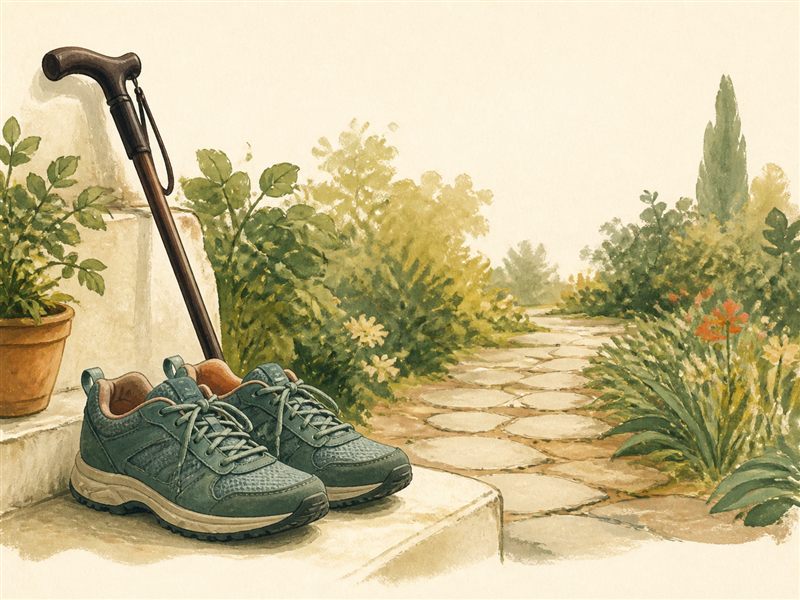
Walking aids work best when they fit the person, the task and the places they go. A stick, frame and rollator offer different kinds of support and call for different balance, grip and coordination. Arrange an assessment if possible, practise turning and sitting safely, and check brakes, tips and handles regularly. Comparing walking sticks, frames and rollators can help you prepare questions before choosing or borrowing equipment.
A device is only one part of staying mobile. Strength and balance activity, suitable footwear, enough light and a clear route may also help. Ask a clinician or falls service what is appropriate if pain, breathlessness or another condition affects movement. For ideas about reducing common hazards, see ways to prevent falls around the home. The Blue Badge guide explains disability eligibility, applications and parking rules. Mobility scooters and powered wheelchairs explains the classes, road rules and assessment options.
Build confidence at the person’s pace
Confidence often returns through small, repeated experiences rather than pressure to “get back to normal”. Agree a first step that feels achievable, such as walking to a nearby room with support or planning a short familiar outing. Make sure someone knows what help is welcome, and let the person decide when they are ready to try more.
If getting up from a chair or moving around the home is difficult, equipment and layout can matter too. A professional can advise on safe transfers and whether a different chair or adaptation would suit the person and room. Choosing a riser-recliner chair covers fit, safe use and questions to ask. Record changes and review the plan if a new fall, illness or change in confidence occurs.